Rigid PCB
Introduction
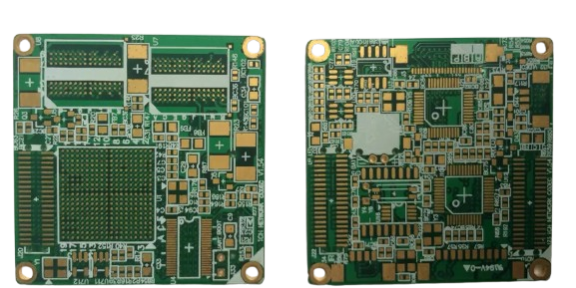
Rigid PCBs (Printed Circuit Boards) play an indispensable role. They serve as the supporting structure for electronic components, providing connections between electronic elements while ensuring the stability and performance of devices. Rigid PCBs are typically made of fiberglass-reinforced epoxy resin (FR4). This type of PCB is very common in electronics manufacturing because they offer high stability and support. Rigid PCBs can be found in multi-layer designs, allowing for more complex circuits and higher electronic density.
Rigid PCB Types
One of the key advantages of rigid PCBs is their versatility in meeting various project specifications and configurations. At PCBWDX, we offer a wide range of rigid PCBs, including:
Single-sided: These original PCBs feature a single layer of conductive material, with all components residing on one side of the board. Their straightforward design makes single-sided PCBs quick and easy to manufacture, minimizing the chance of errors. This budget-friendly option is ideal for low-density designs.
Double-sided: Double-sided PCBs take it up a notch with copper conductive layers on both sides, doubling the space for components. This allows for more design flexibility and increased circuit complexity, suitable for a broader range of projects.
Multilayer: For added sophistication, multilayer PCBs incorporate three or more layers of conductive material with additional layers for support. The advanced curing process of these boards reduces the need for interconnection wiring, conserves space, and results in a dense, robust PCB.
Carrier Board or Mechanical Spacer: When you need a sturdy backer for assembly support with thin PCBs, a carrier board without conductive layers is the solution. These boards are designed for mechanical operations without electrical connections. At PCBWDX, we craft precise rigid PCBs to your specs, ensuring they support all your components and equipment seamlessly.
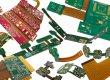
In contrast to rigid PCBs, flexible PCBs use bendable materials such as polyimide. Flexible PCBs are very useful in applications that require bending or folding, such as wearable devices or foldable phones.
Rigid-flex PCBs combine the characteristics of both rigid and flexible PCBs, providing rigid areas and flexible areas within a single component. This design allows electronic devices to maintain core stability while having flexible connections, which is particularly valuable in complex electronic systems.
Definition and Importance of Rigid PCBs in Electronics Manufacturing;
Comparison of Rigid PCBs with Flexible PCBs and Rigid-Flex PCBs
1: History and Development of Rigid PCBs
Origins and Technological Advancements of Rigid PCBs
Rigid PCBs, also known as rigid printed circuit boards, have a development history closely tied to the advancement of modern electronic technology. The origins of rigid PCBs can be traced back to the early 20th century. Initially, circuits were connected to chassis through wire harnesses, but engineers later designed more efficient and compact rigid PCBs.
In 1903, German inventor Albert Hanson proposed the prototype of the rigid PCB. His design included a double-sided conductive through-hole structure, laying the foundation for subsequent PCB development.
As electronic products evolved towards miniaturization, rigid PCBs continuously underwent technological innovations. High-Density Interconnect (HDI) technology, lead-free soldering technology, and rigid-flex PCBs emerged to meet the higher demands of modern electronic products.
2: Types and Structures of Rigid PCBs
Differences Between Single-Layer, Double-Layer, and Multi-Layer Rigid PCBs
Rigid PCBs can be classified by the number of layers into single-layer, double-layer, and multi-layer. Single-layer PCBs have only one conductive layer, suitable for simple circuit designs and lower costs. Double-layer PCBs have two conductive layers connected through vias, enabling more complex circuit designs. Multi-layer PCBs contain three or more conductive layers connected through inner and outer vias, suitable for high-density and high-performance circuit designs.
Material Composition and Layer Structure of Rigid PCBs
The materials of rigid PCBs mainly include the substrate, copper foil, insulating layer, and protective layer. The substrate is typically fiberglass-reinforced epoxy resin (FR4), offering good mechanical strength and electrical performance. The copper foil is the conductive layer, usually with a thickness of 1 ounce per square foot. The insulating layer isolates the conductive layers, typically made of epoxy resin or polyimide. The protective layer is the solder mask covering the outermost layer, protecting the circuit and preventing oxidation.
The layer structure of rigid PCBs includes outer and inner layers. The outer layer usually contains components and solder points, while the inner layer is used for wiring and connections. Through-hole technology enables electrical connections between different layers, meeting the needs of complex circuit designs.
3: Characteristics and Advantages of Rigid PCBs
Firstly, the durability of rigid PCBs is the foundation of their widespread application. Rigid PCBs are typically made of fiberglass-reinforced epoxy resin, which has excellent mechanical strength and impact resistance. Whether in consumer electronics, industrial equipment, or aerospace, rigid PCBs can maintain stable performance under harsh environmental conditions. Additionally, the surface of rigid PCBs is usually coated with an anti-oxidation layer to prevent oxidation and corrosion in humid environments, extending their lifespan.
Secondly, the thermal stability of rigid PCBs is crucial for reliable operation in high-temperature environments. Electronic devices generate a lot of heat during operation, especially in high-power applications. The materials used in rigid PCBs have good thermal conductivity.
4: Manufacturing Process of Rigid PCBs
When designing rigid PCBs, several key factors need to be considered:
Layout Design: Follow the principle of placing signal flow in a straight line to reduce signal coupling and interference.
Interface Circuit: Place filtering, protection, and isolation devices close to the interface, with protection first and filtering second.
Multi-Layer Design: Use multi-layer design when clock frequency exceeds 5MHz or signal rise time is less than 5ns.
Key Wiring Layer: Should be adjacent to a complete ground plane to reduce radiation intensity and improve anti-interference capability.
Power Plane: Should be recessed relative to its adjacent ground plane to suppress edge radiation issues.
Quick Turn
We recognize that speed is crucial in today’s business world. That’s why we offer quick-turn PCB fabrication, delivering in as little as 24 hours. Just let us know your needs, and we’ll take care of the rest.
In the production process and quality control of rigid PCBs, we implement the following strategies:
Material Selection: Strictly control the quality of raw materials to ensure they meet specifications and technical requirements.
Process Control: Each step must be strictly followed according to the specified process flow, including inner layer circuit fabrication, lamination, exposure, development, etching, and stripping.
Quality Control Process: Set multiple quality control points during production to strictly inspect and test each step, such as appearance inspection, circuit tracing, solder quality inspection, and functional testing.
Equipment and Tool Selection and Maintenance: Choose high-precision, high-efficiency production equipment and tools, and perform regular maintenance and calibration.
Personnel Training and Management: Provide professional training for production personnel to improve their skills and production efficiency.
Continuous Improvement and Innovation: Optimize production processes and quality control systems through data analysis and feedback.
5: Application Fields of Rigid PCBs
Rigid PCBs are widely used in various industries. In the consumer electronics field, they are used in smartphones, tablets, and televisions, providing stable electrical connections. In the communication industry, rigid PCBs are used in mobile base stations and satellite communication equipment, ensuring high-frequency characteristics and anti-interference capabilities. In medical devices, rigid PCBs are used in electrocardiographs and MRI machines, ensuring precise signal transmission. Additionally, in the automotive and aerospace industries, rigid PCBs are used in control systems and navigation equipment, providing reliable performance.
Conclusion
The rigid PCB market continues to grow, especially driven by emerging technologies such as 5G, IoT, and AI. These technologies’ rapid development demands higher performance and higher density PCB products, driving continuous market demand growth. It is expected that the rigid PCB market will further grow by 81% in the future. As electronic products increasingly require high-density PCBs, continuous innovation is crucial for the development of rigid PCBs. High-end products such as packaging substrates and multi-layer boards will see rapid growth. Additionally, the push for environmental policies and consumer demand for eco-friendly products also drive the trend towards green PCB products.
In summary, the widespread application and market trends of rigid PCBs in various industries highlight their importance, while continuous technological innovation is the key factor driving their development.