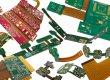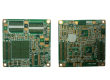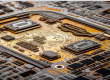
Key Characteristics of Flex PCBs
1 Thickness
Discuss the typical thickness range of Flex PCBs.
2 Bend Radius
Describe the minimum bend radius for different constructions of Flex PCBs.
3 Heat Resistance
Discuss the heat resistance of different materials and its impact on the flex PCB manufacturing process.
4 Chemical Resistance
Describe the chemical resistance of Flex PCB substrates to common fluxes and solvents.
5 Weight
Emphasize the lightweight advantage of Flex PCBs compared to traditional PCBs.
Advantages and Disadvantages of Flexible PCB Technology
Advantages:
Design Flexibility: Flexible PCBs possess the unique ability to bend, twist, and fold without compromising functionality, which facilitates innovative design integrations in contemporary electronic devices.
Space and Weight Reduction: These PCBs minimize the space and weight requirements in electronic devices, thereby enhancing their portability and ease of installation.
Durability and Reliability: Designed to endure numerous flexing cycles, flexible PCBs exhibit exceptional durability in applications subjected to constant movement. They are crafted from robust materials that are resistant to vibrations and mechanical stress.
Reduced Assembly Complexity: By consolidating multiple functions into a single circuit, flexible PCBs negate the need for an assortment of connectors and wires, thereby reducing the likelihood of assembly errors and associated costs.
Enhanced Heat Dissipation: Flexible PCBs can be engineered with materials that provide superior heat dissipation compared to their rigid counterparts, which is vital for compact devices with limited space for cooling solutions.
Disadvantages:
Higher Initial Costs: Flexible PCBs tend to incur higher initial costs due to the need for specialized materials and intricate manufacturing processes.
Material Limitations: The range of dielectric materials available for flexible circuits may not match the performance of those used in rigid PCBs, particularly under extreme conditions.
Challenging Assembly Process: The assembly of flexible PCBs can be more complex, with difficulties in securing components during soldering and inspecting for defects, owing to the inherent flexibility of the substrate.
Reduced Thermal Dissipation: Despite the heat dissipation benefits of certain materials, the flexible nature of PCBs can present challenges in heat management, especially in high-power applications where thermal control is critical.

Common Types and Applications of Flex PCBs
1 Flexible Interconnects
Discuss simple conductor traces or cable patterns used to connect PCBs, displays, and other modules.
2 Flexible Cables
Describe how parallel conductor traces create high-density interconnect flexible cables.
3 Membrane Switches
Describe ultra-thin touch control switches integrating conductor traces, spacers, and flexible coverlays.
4 Rigid-Flex Boards
Discuss creating foldable hybrid PCBs while maintaining complex rigid sections.
5 Flexible Heaters
Describe resistive heating elements made on flexible substrates for heating pads and blankets.

Flexible PCB (Printed Circuit Board) manufacturing processes :
Design: The process commences with the creation of a design file for the flexible PCB, adhering to specific design guidelines that ensure manufacturability.
Film Preparation: This stage involves cutting the flexible substrate materials, such as Kapton or polyester, to the required dimensions and preparing the necessary bonding films.
Photolithography: A photoresist dry film is applied, exposed to the circuit pattern through UV light, and developed to create the etched pattern that defines the conductive traces.
Etching: In this step, the copper that is not protected by the photoresist is etched away, leaving behind the desired conductive pathways.
Stripping: Following etching, the remaining photoresist is removed to prepare the board for subsequent processes.
Die Cutting: The panel is then die-cut to separate individual flexible PCBs, ready for further processing.
Elongation: To enhance the flexibility and lifespan of the PCBs, they are stretched to relieve internal stresses.
Solder Mask: A solder mask is applied over the traces, either by screen printing or lamination, to provide insulation and protect the conductive pathways from environmental factors.
Automated Optical Inspection (AOI): The circuit patterns are inspected using an AOI system to detect and rectify any defects that may have occurred during manufacturing.
Electrical Testing: Each PCB’s electrical connections are tested to confirm they meet the required specifications and function correctly.
Assembly: If necessary, Surface Mount Technology (SMT) components are assembled and soldered onto the PCB to complete the circuit.
Quality Inspection: The completed boards are subjected to a thorough visual inspection and functional testing to ensure they meet the highest quality standards.
Packing and Shipping: Finally, the finished flexible PCBs are carefully packaged to prevent damage during transportation and delivery to the customer.
Comparison of Flex PCBs and Rigid PCBs
Compare Flex PCBs and rigid PCBs in terms of composition, layer count, features, thermal conductivity, current capacity, assembly, shape, and cost.
Future Trends in Flex PCB Technology
Explore trends in flexible PCB technology, including thinner constructions, smaller features, improved materials, high-density flexible multilayers, embedded passive components, stretchable circuits, and 3D-structured flexible circuits.