Aluminum PCB: The Future of Thermal Management in Electronics
What is an Aluminum PCB?
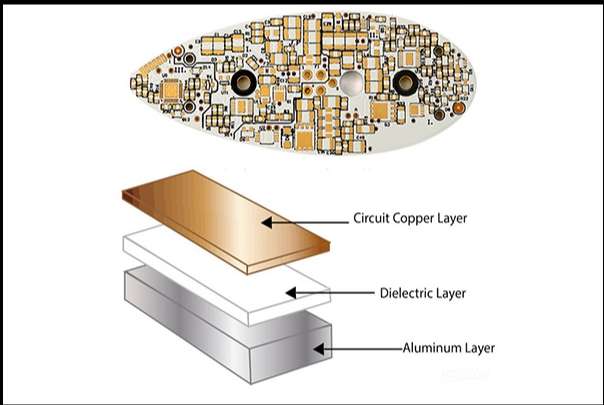
Aluminum-based PCBs, often referred to as metal core PCBs, are a type of printed circuit board that utilizes aluminum as the base material. These boards typically consist of a three-layer structure: a circuit layer (copper foil), an insulating layer, and a metal base layer. This distinctive structure endows aluminum-based PCBs with exceptional heat dissipation capabilities, effectively conducting heat away from electronic components and maintaining the stability of devices in high-power or high-temperature environments. Due to their superior thermal management properties, aluminum-based PCBs are widely applied in electronic devices that require efficient heat dissipation solutions.
Uses of Aluminum PCBs
LED Lighting:
Aluminum-based PCBs are extensively utilized in LED lighting systems. Their superior heat dissipation properties make them ideal for managing the heat generated by high-power LEDs, ensuring optimal performance and longevity of the lighting solutions.
Power Modules:
In the realm of power modules, aluminum-based PCBs play a crucial role. They are employed in rectifier bridges, solid-state relays, and inverters, where efficient thermal management is essential for reliable operation and longevity of the power electronics.
Automotive Electronics:
The automotive sector relies on aluminum-based PCBs for applications such as LED lighting, engine control units (ECUs), and power steering systems. These PCBs provide the necessary thermal performance and mechanical stability required in the demanding environment of vehicles.
Consumer Electronics:
Consumer electronics, ranging from laptops and desktop computers to home appliances, often incorporate aluminum-based PCBs. These PCBs are vital for effective heat management in devices that contain power-hungry components.
Industrial Applications:
Industrial equipment, known for generating significant amounts of heat from high-power machinery, benefits from the thermal management capabilities of aluminum-based PCBs. They help maintain the stability and service life of industrial systems by efficiently dissipating heat.
Manufacturing Process of Aluminum PCBs
Design Considerations for Aluminum PCBs
Aluminum Substrate Thickness:
The thickness of the aluminum substrate
affects its heat diffusion capabilities; thicker substrates provide better
thermal conductivity.
Dielectric Layer Material and Thickness:
Opt for high thermal conductivity
insulating materials such as ceramics or high-performance epoxies, and thinner
dielectric layers for enhanced heat transfer.
Copper Layer Thickness:
The thickness of the copper layer
influences current-carrying capacity and heat dissipation; thicker copper
layers can improve thermal efficiency.
Component Placement:
Position high-power components directly
over the aluminum substrate for optimal heat dissipation, and avoid placing
temperature-sensitive components near high-power components.
Trace Width and Spacing:
Utilize wider traces for high-current paths
to minimize resistance and enhance heat dissipation, and maintain adequate
spacing between traces to prevent electrical shorts and reduce crosstalk.
Thermal Vias:
Employ thermal vias to transfer heat from
the copper layer to the aluminum substrate, and strategically place thermal
vias around high-power components.
Multilayer Board Structure:
A multilayer board structure can more
effectively conduct heat; prioritize increasing the copper foil area on layers
closest to the heat source to efficiently reduce thermal resistance.
Copper Foil Area: Expanding the copper foil area can reduce thermal resistance; however, beyond a certain threshold, the efficiency of thermal conductivity may diminish. Therefore, selecting the appropriate copper foil area is crucial.
Board Thickness:
In single-layer boards, increasing board
thickness reduces thermal resistance as horizontal heat conduction dominates.
In multilayer boards, increasing board thickness reduces thermal resistance if
the copper foil area for heat dissipation is small; conversely, decreasing
board thickness is beneficial if the copper foil area is large.
Thermal Interface Materials (TIM):
Use appropriate thermal interface materials
between the aluminum substrate and the heat sink to ensure efficient heat
transfer.
Thermal Simulation:
Conduct thermal simulations to predict and
optimize the design, reduce production costs, and provide optimized design
solutions and board constructions.
Challenges and Solutions in Aluminum PCBs
Thermal Management Issues:
Challenge: Aluminum-based PCBs are primarily used in applications that require
efficient heat dissipation. Improper design can lead to equipment failure due
to overheating.
Solution: Employ enhanced heat dissipation
design techniques, such as utilizing thermal vias or strategically placing
copper pads to distribute heat effectively.
Material Sourcing Issues:
Challenge: Obtaining materials that meet quality standards from reliable PCB
manufacturing companies while maintaining reasonable PCB manufacturing costs
can be challenging.
Solution: Thoroughly vet potential suppliers
and discuss expectations upfront to mitigate risks associated with subpar
materials.
Complexity of Manufacturing Process:
Challenge: The manufacturing process for aluminum-based PCBs is more complex than
that of traditional FR-4 PCBs, requiring a deep understanding of project
specifications and strict adherence to tolerances.
Solution: Establish a cooperative relationship with experienced aluminum PCB production suppliers to simplify communication and enhance the efficiency of the prototyping process.
Thermal Expansion Issues:
Challenge: Due to the different thermal expansion rates of aluminum compared to
traditional PCB materials, stress on solder joints can occur during assembly or
operation in thermally challenging environments.
Solution: Pay attention to thermal relief
strategies to ensure that solder joints are not stressed during assembly or
operation in thermally demanding conditions.
Cost Considerations:
Challenge: While the initial manufacturing cost of aluminum-based PCBs may be higher
than traditional methods, the long-term benefits in reliability and performance
often outweigh these costs.
Solution: Many PCB manufacturing companies
offer competitive pricing, making aluminum an attractive option.
Design Complexity:
Challenge: Designing aluminum-based PCBs requires consideration of thermal
management, circuit layout, and manufacturing processes to ensure optimal
performance and reliability.
Solution: Designers can create aluminum-based PCBs that meet the specific requirements
of their applications by carefully selecting the appropriate substrate
thickness, dielectric material, and copper layer thickness.
In Summary
Aluminum PCBs are increasingly taking on a critical role in
managing the heat generated by today’s electronics, which are trending towards
compactness, enhanced power, and energy efficiency. With the escalating heat
output from electronic components, the necessity for efficient heat dissipation
solutions is becoming more critical than ever. These solutions are essential
for sustaining performance, ensuring reliability, and prolonging the lifespan
of products. Aluminum PCBs offer a robust answer to these thermal challenges
and have become a vital element in the design and manufacturing of
high-performance electronic devices. Their importance spans across a multitude
of industries, making them an indispensable component in the realm of modern
electronics.
Differences between Aluminum-based PCBs and FR4 PCBs: