Rigid Flex PCB Assembly: Techniques, Challenges, and Best Practices
What is the Rigid Flex PCB?
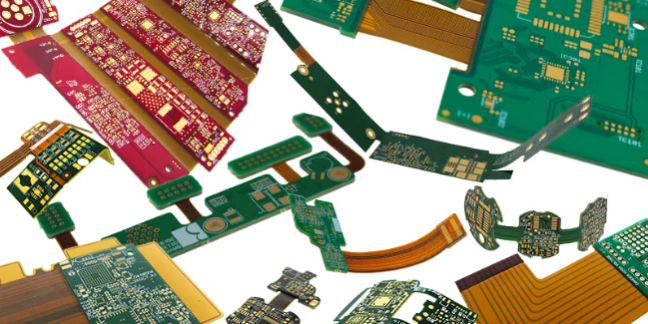
Rigid-flex PCBs, or flex-rigid boards, merge the rigidity of traditional PCBs with the flexibility of flex circuits.Featuring rigid sections for stable component mounting and flexible sections
made from polyimide for bending, these boards facilitate intricate 3D designs,
conserving space and eliminating the need for extra connectors. They enhance
reliability, withstand mechanical stress, and are ideal for compact electronics
and demanding applications.
What Are the Differences Between Rigid-Flex PCBs and Traditional Rigid PCBs?

- Cost-effectiveness: Traditional rigid PCBs often provide a higher cost-effectiveness in manufacturing, making them the preferred choice for many standard electronic applications.
- Mass production suitability: When it comes to mass production of electronic products, traditional rigid PCBs can be produced efficiently and economically in large quantities.
- Standard form factor: For applications where standard rectangular or square PCBs fit well into housings, traditional rigid boards are sufficient.
- Flexibility: Flexible PCBs excel in applications that require continuous bending or flexing. They can conform to various shapes and fit into tight spaces.
- Lightweight: The lightweight nature of flexible PCBs is advantageous in weight-sensitive applications such as drones and portable electronic devices.
- Space-saving: In applications where compactness is crucial, flexible PCBs offer the advantage of saving space.
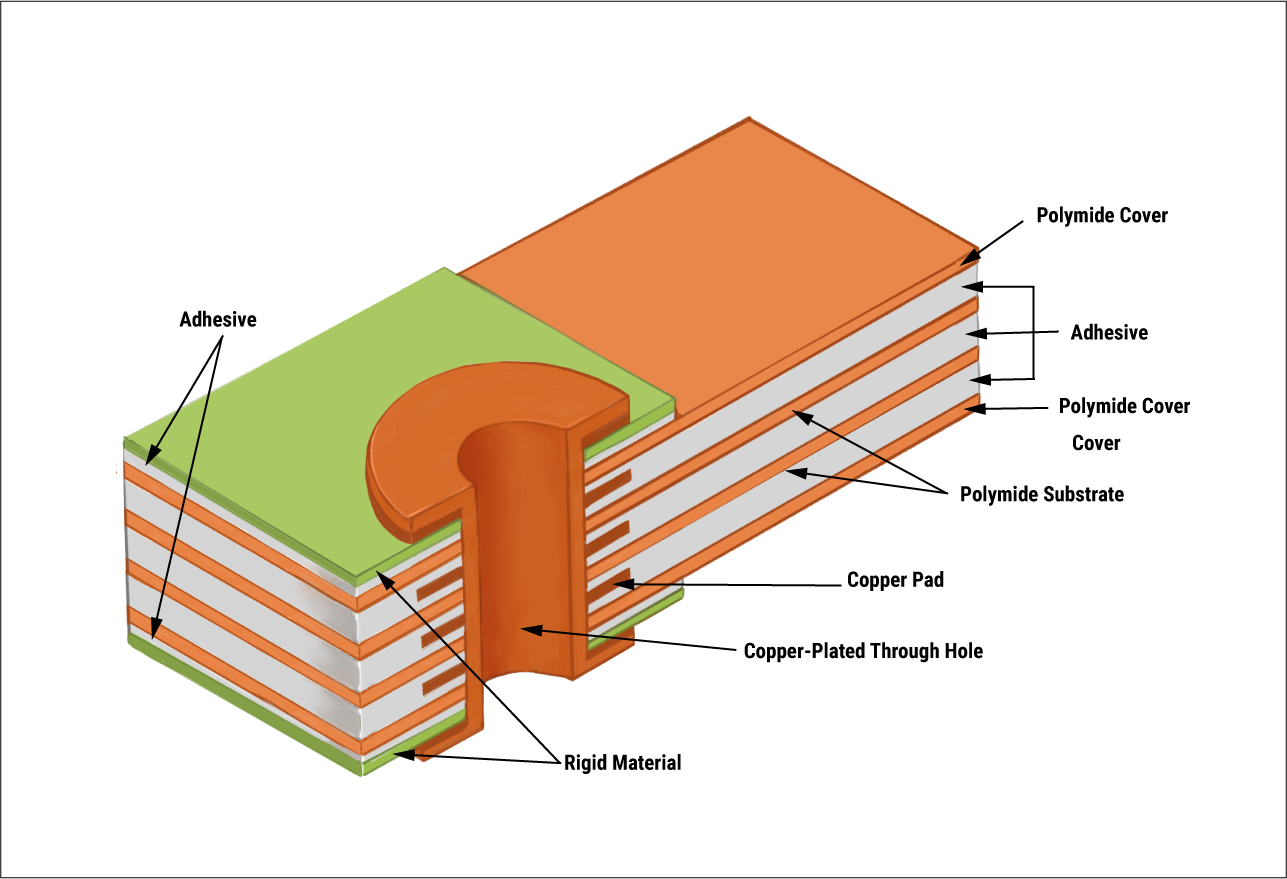
- Rigid-flex PCBs differ significantly from traditional rigid PCBs in that they incorporate both rigid and flexible areas on a single board. Unlike traditional rigid PCBs, which are made entirely of inflexible materials and do not bend or flex, rigid-flex PCBs are engineered to handle bending and flexing in designated zones.
Manufacturing Process of Rigid Flex PCBs
 1 Material Preparation
Introduce the rigid and flexible substrate materials required for manufacturing Rigid Flex PCBs.
2 Pattern Transfer
Discuss the photolithography and etching processes used to form conductive patterns on each layer.
3 Hole Formation
Describe the drilling or punching process and the formation of vertical interconnections through copper plating.
4 Lamination
Discuss the precise alignment and bonding of rigid and flexible core layers under high temperature and pressure.
5 Outer Layer Imaging
Describe the photolithography and etching processes used to form traces and features on the outer layers.
6 Solder Mask and Surface Finish
Discuss the application of solder masks and surface finishes to exposed copper surfaces.
7 Cutting and Shaping
Describe the process of cutting large panels into individual PCBs.
8 Testing
Emphasizing the Importance of Rigid Flex PCBs in the Modern Electronics Industry:Rigid Flex PCBs are increasingly significant in the modern electronics industry due to their unique combination of rigid and flexible sections, which allows for enhanced design flexibility and improved performance in a variety of applications. These boards offer a compelling array of advantages over traditional rigid PCBs.
In Summary
Rigid-flex PCBs can streamline assembly processes,
reducing the volume required in three-dimensional spaces and minimizing the use
of connectors, which in turn lowers material costs. They also optimize
production efficiency and are well-suited for applications in harsh
environments, effectively reducing the overall costs associated with rigid-flex
PCBs. By integrating these features, rigid-flex PCBs not only enhance
functionality but also contribute to cost savings in the long run.